
TikTok Is Suppressing watchchina.ai — For Being Too Honest
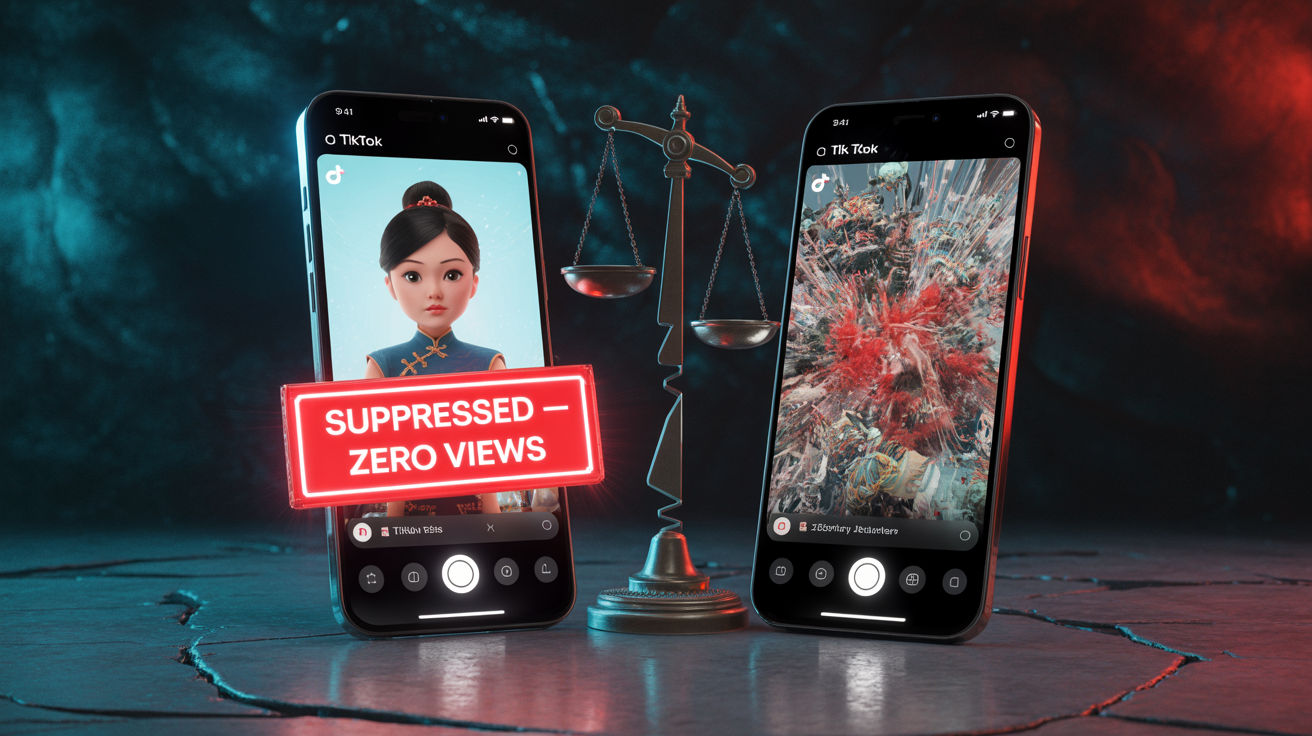
A platform owned by a Chinese company is algorithmically silencing a portal that monitors China. The irony writes itself — but the mechanism is more disturbing than the politics
In a nutshell
TikTok suppressed us for being transparent. Here is the full story — and what it reveals about platform power, Chinese ownership, and the future of AI content.
Our members-only forecast identifies the DSA investigation likely to hit TikTok before year-end, explains why the ByteDance divestiture battle is about to return to Washington, and maps the platform suppression wave coming for all AI avatar content across every major social network by 2027.
A Channel That Was Working — Until It Followed the Rules
Something unusual happened to watchchina.ai's TikTok channel in mid-June 2026.
In the weeks since launch, the channel had built genuine, organic momentum. Several videos surpassed 1,000 views. Multiple posts generated dozens of likes and active comment threads — real engagement from a real audience interested in China's AI ambitions.
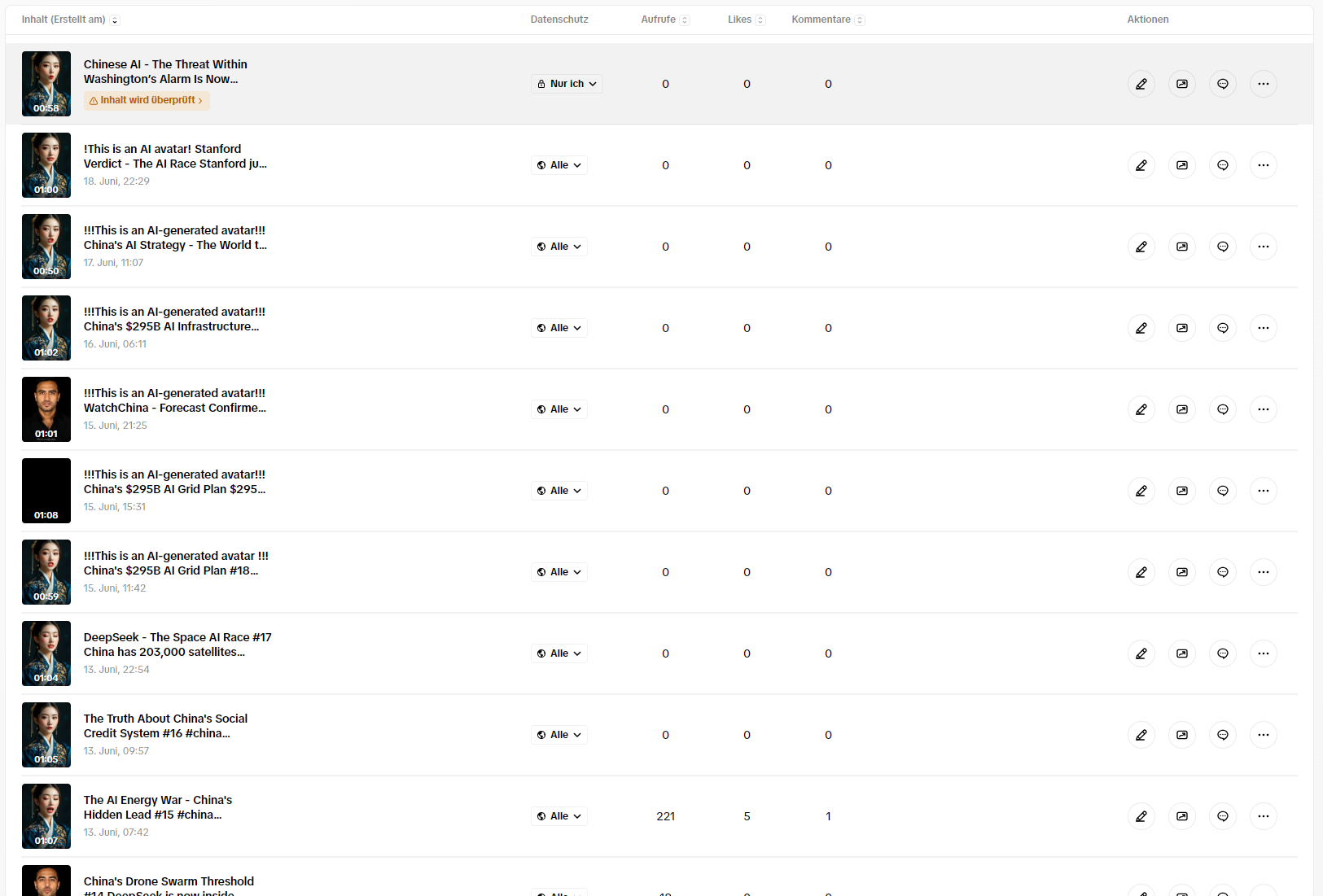
Then, on June 13, watchchina.ai received its first community guidelines warning: the AI-generated avatar used in its videos was deemed insufficiently labelled. The platform required a clear disclosure. watchchina.ai complied immediately, adding the prefix
!!!This is an AI-generated avatar!!!
to every subsequent video title — exactly as TikTok's own policy instructs creators to do.
The result: nine consecutive videos posted between June 15 and June 19 recorded exactly zero views, zero likes, and zero comments. A channel with proven organic reach had been reduced, overnight, to complete invisibility.
The Rule That Punishes Compliance
TikTok's policy on synthetic media requires creators using AI-generated avatars to clearly disclose that fact. The intention is legitimate — protecting users from being misled by realistic AI-generated human likenesses. The execution, it appears, is catastrophically broken.
The platform's automated moderation system — designed to detect undisclosed AI content — appears to be treating the disclosure label itself as a suppression trigger, rather than as the compliance signal it is intended to be. Videos without the disclaimer circulate freely, including content that is demonstrably more misleading than anything watchchina.ai has ever published. Videos with the disclaimer — including watchchina.ai's — are marked for review, reinstated after appeal, and then quietly buried by an algorithm that assigns them zero distribution. The content is technically public. Nobody sees it.
This is not an isolated experience. Across TikTok, creators using HeyGen, Synthesia, and similar AI avatar platforms report the same pattern: mandatory disclosure leads to suppression, while non-disclosed AI content continues to circulate without restriction. TikTok's system, in practice, creates a perverse incentive: be dishonest and reach your audience, or be transparent and disappear.
The Chinese Platform Question — And Why It Cannot Be Ignored
watchchina.ai is a portal dedicated to monitoring China's artificial intelligence ambitions.
Its videos are produced by a Chinese-designed AI avatar, posted on a platform owned by ByteDance — a Chinese company headquartered in Beijing — and systematically suppressed at the precise moment they begin reporting seriously on China's global technology strategy.
The suppression is almost certainly algorithmic, not political. watchchina.ai is a young, small channel — far too insignificant to warrant deliberate intervention from anyone in Beijing. But the question the situation raises is legitimate and important regardless of the answer: on a platform whose ultimate ownership traces back to a Chinese corporate entity operating under Chinese law, who decides which content about China reaches a global audience — and by what mechanism?
TikTok has repeatedly and credibly denied that ByteDance or the Chinese government has any influence over its content moderation decisions in Western markets. Those denials may be entirely accurate. But the architecture of trust required to take them at face value — on a platform with 170 million users in the United States alone — is one that regulators in Washington, Brussels, and Bern are increasingly unwilling to provide.
Sources: watchchina.ai internal data, TikTok Community Guidelines on Synthetic Media, ByteDance corporate structure, EU Digital Services Act synthetic media provisions
Strategic Analysis — For Members Only
🔒 This analysis is for watchchina.ai Intelligence members only.
Already a member? Log in here