
“All Necessary Measures”: The Distillation War Goes Diplomatic — As Chinese Users Quietly Flock to Claude
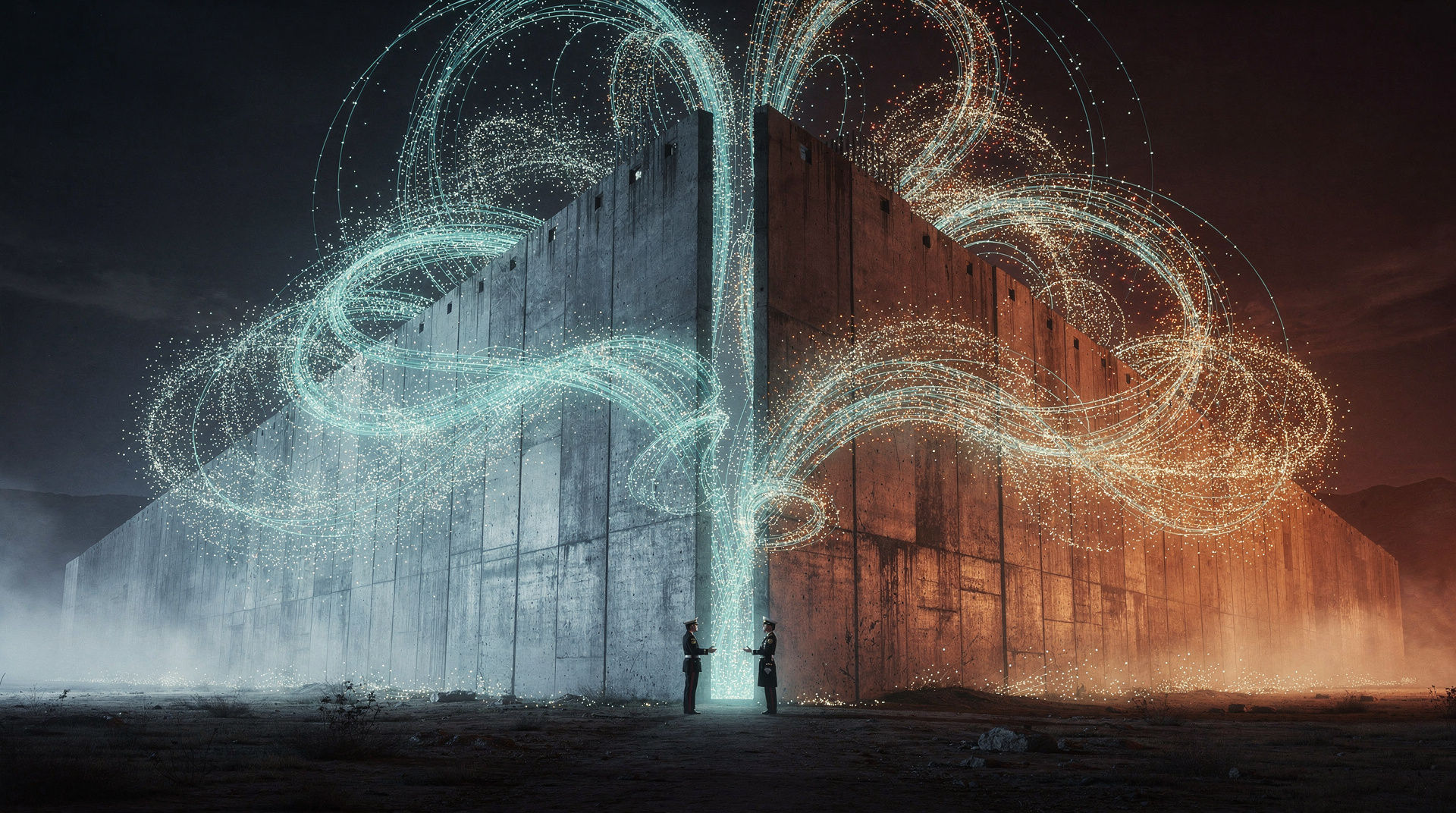
Beijing threatens retaliation over US "smear campaign" sanctions threats. But the most revealing story is the one both governments would rather ignore: the borders they're building don't work
In a nutshell
China threatens "all necessary measures" over US sanctions. But while both governments build walls, their own citizens climb over them — Chinese users flock to Claude, Americans to DeepSeek.
Our members-only forecast explains why the distillation dispute will produce symbolic sanctions but no real decoupling, why China's "restrict the powerful features" signal will harden into formal two-tier policy within six months, and why both governments are being forced toward enforcement theater as the gap between control rhetoric and uncontrollable reality widens.
From Corporate Accusation to State Confrontation
For weeks, watchchina.ai has tracked the "distillation" accusation as it escalated from abstract policy paper, to the named Anthropic-versus-Alibaba dispute, to today's endpoint: a direct government-to-government confrontation. The theory has now become a diplomatic crisis.
China warned it would take "all necessary measures" if the US moves to sanction Chinese artificial intelligence companies over allegations they improperly used American models to train their own systems. The Ministry of Commerce on Monday criticized the Trump administration's accusations that Chinese firms stole US intellectual property through model distillation, urging Washington to stop what it described as a "smear campaign" and sanctions threats. This is the same accusation watchchina.ai examined in depth — the claim that China's AI efficiency is built on extracting capabilities from American models — now elevated to the level of formal state threat and counter-threat. Beijing is no longer denying quietly; it is warning loudly, and promising retaliation.
The Timing Is a Negotiation
watchchina.ai readers will recognise this confrontation as one move in a larger, carefully choreographed sequence. As reported just days ago, Chinese Vice Foreign Minister Ma Zhaoxu visited Washington seeking clarity on upcoming US-China AI talks, and DeepSeek's Liang Wenfeng broke 17 months of silence to argue America's lead is a compute-dependent illusion. Today's "all necessary measures" warning fits the same pattern: China entering negotiations projecting strength, refusing the supplicant's posture, and framing US pressure as illegitimate rather than justified.
The distillation accusation is genuinely double-edged, exactly as watchchina.ai has consistently argued. There is real evidence — the January conviction of a Google engineer for AI espionage, Chinese engineers' own admissions that distillation is widespread. But there is also genuine Chinese innovation that no accusation of theft can explain, and there is transparent American self-interest in framing a cheaper competitor as a thief. Beijing's "smear campaign" language is self-serving, but it is not entirely wrong: the accusation has become a convenient instrument for justifying restrictions on a rival that is winning on price and diffusion. Both governments are using the distillation fight as leverage in a negotiation neither has yet defined — which is precisely why China is seeking clarity on what Washington even wants from the talks.
The Border That Doesn't Work — In Both Directions
Beneath the diplomatic theatre lies the detail that exposes the whole confrontation as partly performative, and it is the most quietly devastating story of the week. While both governments build walls, the people on both sides are climbing over them. Using VPNs, company accounts and other work-arounds, China's AI users are flocking to OpenAI's ChatGPT and Anthropic's Claude, despite American companies' attempts to limit their usage and increasingly fiery rhetoric from policymakers about the perceived risks of China's access to American products.
This is the perfect mirror of the story watchchina.ai documented from the other direction — American developers migrating to DeepSeek and Chinese open models for their cost and openness. The reality on the ground is that the global community of AI developers, researchers, and users does not respect the borders their governments are trying to draw. Chinese engineers want Claude; American startups want DeepSeek; and both route around the restrictions with VPNs, subsidiaries, and open-weight downloads. And even as Beijing threatens retaliation over American accusations, its own contradictions deepen: this week Moonshot AI released its Kimi K3 model weights for free public download, extending China's open-source diffusion, while Chinese state media simultaneously argued that China should restrict access to the most powerful features of its AI models. Both superpowers are discovering the same uncomfortable truth. You can threaten sanctions, build detection tools, and issue "all necessary measures" warnings — but AI capability, once released into a connected world, flows like water around every wall you build. The distillation war will be fought in press releases and negotiating rooms. It will not be won there, because the thing both sides are trying to control has already escaped their grip.
Sources: Bloomberg, NBC News, Ministry of Commerce of the People's Republic of China, South China Morning Post
Strategic Analysis — For Members Only
🔒 This analysis is for watchchina.ai Intelligence members only.
Already a member? Log in here