
Nine of the Top Ten: China’s AI Video Dominance Isn’t Coming for Hollywood — It’s Coming for Reality Itself
A day after watchchina.ai reported China owns the AI video field, the data confirms it: nine of the world's ten best video models are Chinese. But the real stakes, as a new analysis warns, go far beyond entertainment
In a nutshell
Nine of the world's ten best AI video models are Chinese. But this was never about Hollywood — it's about who controls the tools that manufacture visual reality itself.
Our members-only forecast explains why AI video will become a formal Western national-security category within a year — but too late to change the leaderboard, why the perception-infrastructure risk will drive an explosive market in deepfake defense and provenance, and why Google's lone holdout position just became one of the most strategically pivotal assets in the entire AI race.

The Number That Ends the Debate
Yesterday, watchchina.ai argued that in generative AI video, China no longer competes with Silicon Valley — it competes only with itself. Today, a fresh Bloomberg Opinion analysis delivers the single statistic that removes any remaining doubt, and it is more lopsided than even this portal suggested.
Outside of Alphabet's Google, nearly all of the leading video-generation models are Chinese, making up nine of the top 10 text-to-video systems on benchmarking platform Artificial Analysis' leaderboard. Nine of ten. A single American company, Google, holds the lone non-Chinese position in the global top tier. As the analysis frames it, new large language models like Moonshot's Kimi K3 have dominated the debate about China's AI ambitions — yet the clearest evidence of the country's prowess may be in video. watchchina.ai has spent a summer documenting China's advance across chips, models, robots, and deployment. But in no other frontier domain is the dominance this close to total. The text-model race is contested. The video race is, by the numbers, over.
Why This Is About Far More Than Microdramas
watchchina.ai flagged yesterday that video matters more than it appears, and the Bloomberg analysis sharpens exactly why with a warning this portal considers among the most important of the entire summer: the stakes could extend far beyond just shaking up Hollywood, and AI video is more than just microdramas. The easy way to dismiss China's video dominance is to treat it as a niche — TikTok clips, cheap advertising, disposable entertainment. That dismissal is a mistake, and a dangerous one.
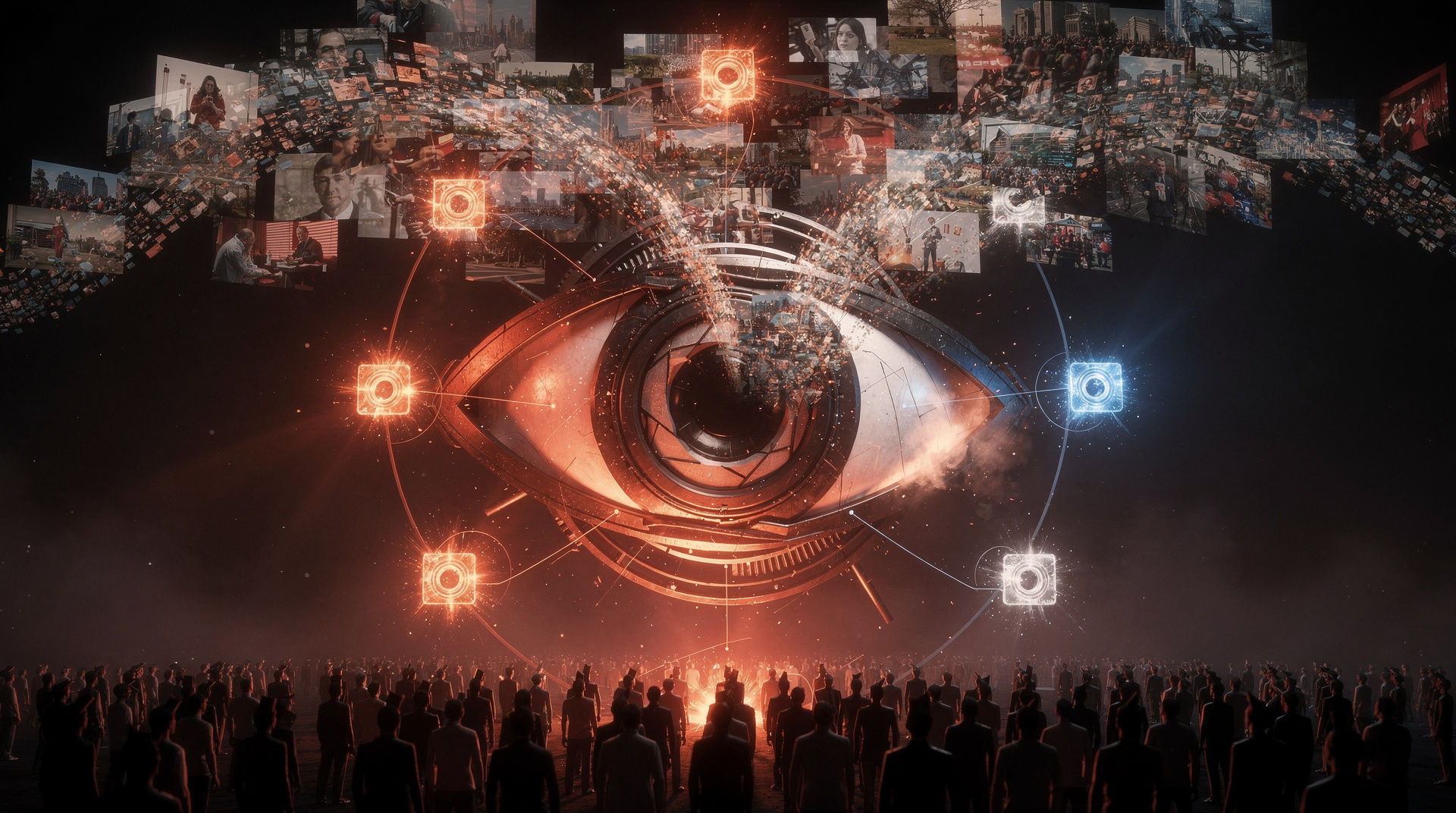
Video is the medium through which most of humanity now perceives reality. It is how billions of people learn what happened, judge what is true, form beliefs about the world, and decide whom to trust. The tools that manufacture synthetic video are, therefore, not entertainment tools — they are reality-construction tools. When nine of the ten most capable such tools on Earth are built by Chinese firms, all of them subject to China's National Intelligence Law, the question is no longer who wins the creative economy. It is who holds the infrastructure for manufacturing convincing visual reality at planetary scale. This connects directly to the deepfake, disinformation, and narrative-warfare threats tracked by watchchina.ai's sister portal warrier.ai: the same technology that lets a small business generate a cheap ad lets a state or a bad actor generate a convincing event that never happened. The dominance of a medium is the dominance of perception — and perception is the substrate on which politics, markets, and truth itself now rest.
What watchchina.ai Will and Won't Conclude
As across all fifty-five briefings, honesty requires the counterweights, and here they are real. Google's continued presence in the top tier proves the field is not hermetically Chinese, and Google is a formidable holdout with the resources to fight. The benchmark leaderboard measures technical capability, not real-world market control, trust, or safety — and Chinese video models carry genuine, unresolved liabilities: the Hollywood copyright disputes watchchina.ai detailed yesterday, the legal exposure that constrains Western enterprise adoption, and provenance questions no one has independently audited. Dominance on a leaderboard is not the same as dominance of a market, and watchchina.ai will not conflate them. It is also true, as a separate analysis this week noted, that America retains major advantages elsewhere — Palantir's blockbuster earnings on sovereign-AI demand, the enduring US lead in the deepest frontier reasoning, ChatGPT's vast consumer lead. China winning video does not mean China winning everything.
But the structural warning stands, and watchchina.ai would be failing its readers to soften it. The world spent the summer debating chips and language models while China quietly achieved near-total dominance of the tools that generate visual reality — and almost no one in Western policy circles is treating it as the strategic priority it is. The Center for a New American Security's own senior fellow conceded this week that, on current trends, Chinese AI will more likely than not become the default for developing countries. Apply that to video specifically, and the implication is stark: across much of the world, the synthetic images and clips that shape how people see events will increasingly be generated by Chinese-built, Chinese-law-bound tools. That is not a Hollywood story. It is a story about who builds the lens through which the future watches itself. watchchina.ai flagged the field yesterday. Today the data confirmed it. And the lens, for now, is being ground in China.
Sources: Bloomberg Opinion (August 9, 2026), Artificial Analysis, CNBC, Center for a New American Security, TechTimes
Strategic Analysis — For Members Only
🔒 This analysis is for watchchina.ai Intelligence members only.
Already a member? Log in here