Apple Bent the Knee: To Sell AI in China, the World’s Most Valuable Company Had to Build It Beijing’s Way
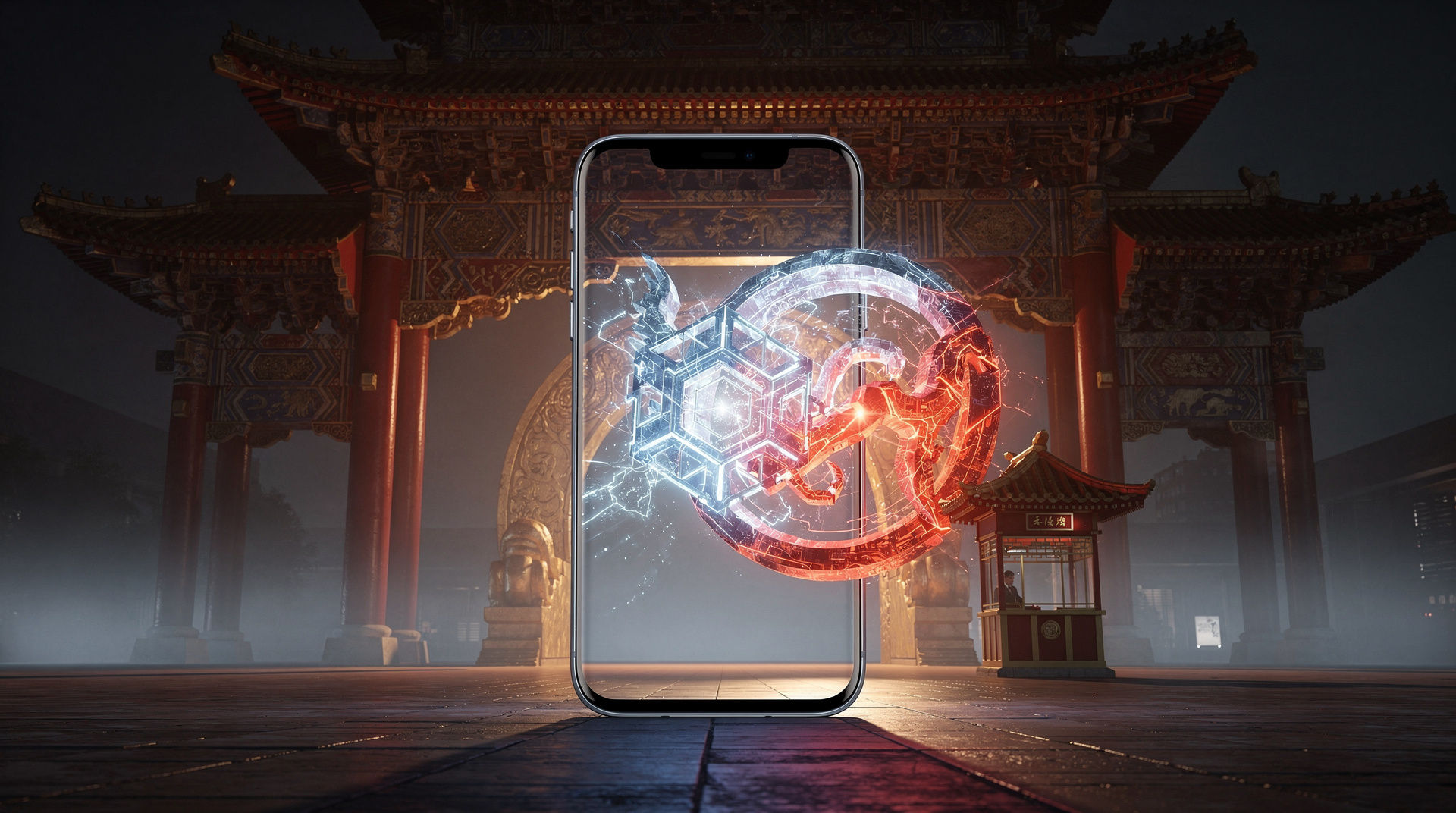
Two months after watchchina.ai reported Apple was locked out of China's AI market, Apple has its answer — a custom model trained with Alibaba's help. It's a triumph of adaptation and a lesson in who really sets the terms
In a nutshell
Two months ago, Apple was locked out of China's AI market. Now it has a custom model — built with Alibaba, approved by Beijing, on China's terms. A triumph of adaptation, and a lesson in who holds the real power.
Our members-only forecast explains why Apple's China model becomes the template every foreign tech firm will be forced to copy, why "regional AI stacks under one interface" will become the dominant global product architecture by 2028, and why Apple's concession will intensify US political scrutiny — trapping it between two governments' irreconcilable demands.

The Resolution of a Story watchchina.ai Has Tracked Since June
Back in Package #7, watchchina.ai documented Apple's predicament: it had unveiled its most ambitious AI ever at WWDC, and Chinese iPhone users could not access any of it, because China restricts foreign AI and Beijing's Cyberspace Administration must approve every model before launch. We forecast then that Apple would face a stark choice — full compliance with Chinese requirements, or exclusion from its most important hardware market. This week, Apple made its choice, and it chose compliance in the most complete form imaginable.
Apple has trained a custom artificial intelligence model for China with help from Alibaba, marking a significant shift in how the iPhone maker plans to bring Apple Intelligence to one of its largest and most tightly regulated markets. The China-focused large language model was trained with Alibaba's support and would give Apple greater control over the AI running on devices sold in the country. And the milestone is genuinely historic: if approved, the proprietary model could make Apple the first foreign company allowed to offer its own AI model in China. The company that spent two months locked out has not merely found a workaround — it has potentially become the first Western firm to be granted a seat inside China's walled AI garden.
The Timing Reveals the Stakes
Apple did not do this out of preference. It did it because the alternative was losing China, and the numbers explain the urgency watchchina.ai flagged in June. Apple captured 19% of mainland China's smartphone market in the second quarter, behind Huawei's 23%, while recording its strongest second quarter there. Apple is fighting Huawei on Huawei's home turf, and losing the top spot — and as Omdia notes, phone competition is shifting from isolated AI features toward system-level agents that can work across apps. In other words, the competitive battleground is moving to exactly the AI capabilities Apple was forbidden from offering in China. Without a China-legal AI model, Apple's premium iPhones would be competing against Huawei's fully AI-integrated devices with one hand tied behind their back. The custom model is not a nice-to-have. It is survival in Apple's second-largest market.
But the deeper significance is the one watchchina.ai has emphasized since the beginning: look at who holds the power in this arrangement. The Verge called it a rare US-China AI partnership — but control does not mean independence. Apple may control more of the model, but Alibaba still provides the technical support and, crucially, the route through China's regulatory and infrastructure requirements. Apple, the most valuable company on Earth, could not enter China's AI market on its own terms, with its own technology, using its own partners like Google's Gemini. It had to train a China-specific model, with a Chinese partner, subject to Chinese approval, running on Chinese-compliant infrastructure. This is precisely the gatekeeper dynamic watchchina.ai identified in June: Beijing has built a toll booth at the entrance to its AI consumer market, and every foreign company — even Apple — must pay the toll in the currency of control.
What This Teaches About the Real Balance of Power
watchchina.ai will give Apple its due, because honest analysis cuts both ways. This is a genuine feat of corporate adaptation. Apple identified an existential market problem and solved it with remarkable speed, potentially becoming the first foreign firm inside China's AI market — a real competitive achievement that its Western rivals, still locked out, have not matched. And the "one interface, many regional models underneath" architecture that Apple is pioneering may genuinely preview how global AI products evolve: a single familiar product hiding materially different models and infrastructure in each country. Apple is not merely complying; it is innovating a new model of how a global company operates in a fractured AI world.
But the lesson for the broader contest is unmistakable, and it reinforces everything this portal has documented across fifty-seven briefings. In the US-China AI struggle, the two governments spend enormous energy on chips, sanctions, and frontier benchmarks — while the actual leverage increasingly lies in market access and regulatory control, where China holds a commanding position. America can restrict China's access to Nvidia chips; China can require the world's most valuable company to rebuild its AI from scratch, Beijing's way, just to sell phones. Both are forms of power, but only one of them just bent Apple to its will. The custom model is a triumph for Apple's engineers and a warning for everyone else: the price of the Chinese market is now paid in sovereignty over your own technology. Apple paid it. It will not be the last. And each foreign company that pays deepens the dependency on Chinese partners, Chinese approval, and Chinese infrastructure that watchchina.ai has watched Beijing patiently construct all summer — one toll booth, one partnership, one approval at a time.
Sources: Reuters, Tech Startups, The Verge, Omdia, South China Morning Post
Strategic Analysis — For Members Only
🔒 This analysis is for watchchina.ai Intelligence members only.
Already a member? Log in here