
No, China Didn’t Just “Make It Illegal for AI to Take Your Job” — But What It Actually Did Matters More
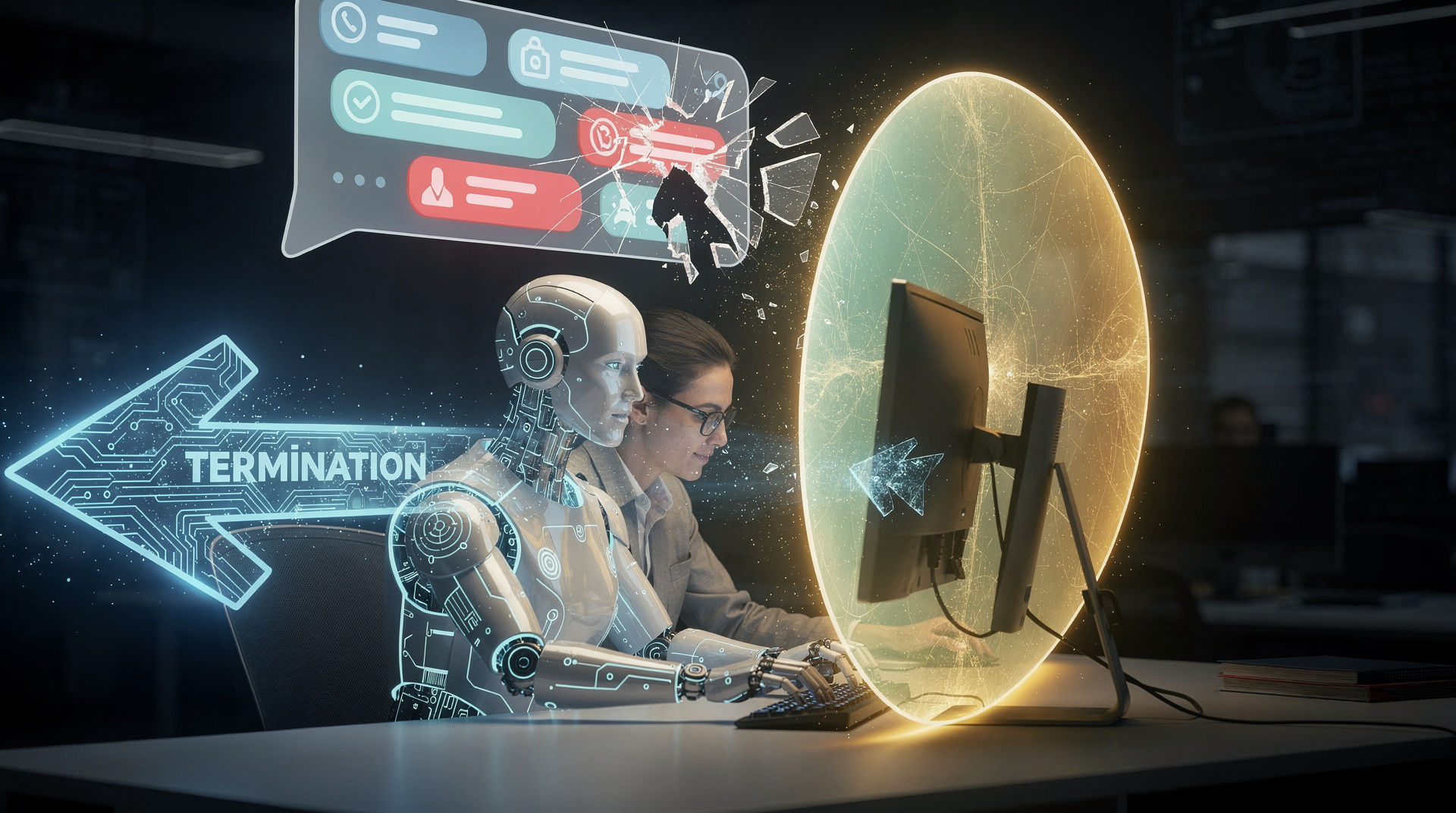
A viral post claims breaking news. The truth is older, narrower, and quietly more significant: China's courts have ruled you can't be fired just because an AI can do your work — and no Western country has matched it
In a nutshell
"BREAKING: China made it illegal for AI to take your job" is going viral. It's wrong three ways — not new, not a law, not a ban. But what China's courts actually ruled is quietly more significant, and no Western country has matched it.
Our members-only forecast explains why China will likely codify the court precedent into explicit statutory protection within two years, why worker protection is becoming one of Beijing's most underrated soft-power assets in the global AI-labor debate, and why enforcement — not principle — is the weak point where the gap between promise and practice will quietly widen.

The Viral Claim, Corrected
A post is circulating widely right now: "BREAKING: China just made it illegal for AI to take your job." For seventy briefings, watchchina.ai has held one discipline above all others — separate the signal from the noise, and never inflate a real story into a false one, regardless of which direction it flatters. So before anything else: the viral claim is wrong in three specific ways, and the corrections matter.
First, it is not "breaking." The rulings it refers to date from April and May 2026 — roughly four months old. Second, it is not a new law. It is a set of court decisions interpreting China's existing Labour Contract Law, establishing legal precedent rather than fresh legislation. Third, and most importantly, it does not make it "illegal for AI to take your job." AI is fully permitted to perform work in China. What the courts ruled is narrower and more precise: a company cannot fire a worker solely on the grounds that an AI can now do their job. The distinction is everything, and watchchina.ai flags it because getting it wrong obscures what is genuinely significant here.
What the Courts Actually Ruled
The real story, stripped of viral exaggeration, is still consequential — and it connects directly to the labor anxiety watchchina.ai documented in Package #42, when Beijing quietly dropped its urban employment target for the first time in decades. The anchor case involved a 35-year-old fintech worker in Hangzhou, surnamed Zhou, whose job included matching user queries with large language models and filtering the outputs. When his employer began using AI for that work, it offered him a demotion and a roughly 40% pay cut, to 15,000 yuan. Zhou refused. The company fired him. He challenged it — and won.
The Hangzhou Intermediate People's Court established the operative legal principle: a company's decision to adopt AI is a strategic business choice, not an "unforeseeable change in objective circumstances," and therefore does not by itself meet the legal threshold for terminating a contract under Chinese labour law. In a separate statement on the same case, the court held that companies cannot unilaterally lay off employees or cut salaries due to technological progress alone, adding pointedly that "employers are prohibited from shifting operating costs to employees." A second ruling in Beijing within six months affirmed the same principle. This is not a ban on AI. It is a limit on using AI as a pretext for cheap dismissal — a meaningful but bounded worker protection.
Why the Real Story Beats the Viral One
Here is what watchchina.ai finds genuinely notable, and it is more interesting than the false headline: no Western country has established an equivalent protection. As these rulings landed, roughly 78,000 tech workers were laid off globally in early 2026, with nearly half attributed to AI — and in the US and EU, no comparable legal shield exists against being replaced by automation. China, the country building the most aggressive AI-and-robotics deployment on Earth, is simultaneously the country erecting the first real legal guardrails around AI-driven dismissal. That apparent contradiction is the actual story, and it fits precisely the pattern watchchina.ai has tracked all year: China races to deploy AI while trying to manage its domestic social consequences, because an authoritarian state that cannot deliver employment loses the core of its bargain with its people.
But watchchina.ai will hold the honest complications, because the protection is narrower than either its admirers or the viral post suggest. The rulings do not prevent layoffs for genuine "business downsizing or operational difficulties" — a company facing real financial pressure can still cut staff; it simply cannot cite AI adoption alone as the reason. The courts also placed responsibility on workers themselves, stressing that employees must keep adapting and reskilling to stay relevant — a notably conditional protection that puts the burden partly back on the individual. And a court precedent is not the same as comprehensive statutory protection; its reach depends on future enforcement and how broadly other courts apply it. So the accurate summary is neither the viral "China bans AI from taking jobs" nor a dismissal of the news as nothing. It is this: China's courts have carved out a real but limited principle — AI efficiency alone is not lawful grounds for firing you — that no Western jurisdiction has matched, arriving exactly as China confronts the labor disruption its own AI ambitions are accelerating. The viral post got the facts wrong. The underlying truth is quieter, older, and more revealing than the fake headline ever was — which is, as watchchina.ai has argued for seventy days, almost always the case.
Sources: South China Morning Post, Bloomberg, The Register, The Next Web, TechRadar, Gizmodo, Hangzhou Intermediate People's Court (via State Council)
Strategic Analysis — For Members Only
🔒 This analysis is for watchchina.ai Intelligence members only.
Already a member? Log in here