$33 Billion Gone: America’s Threats and China’s Own Bubble Are Crushing Chinese AI Stocks at Once
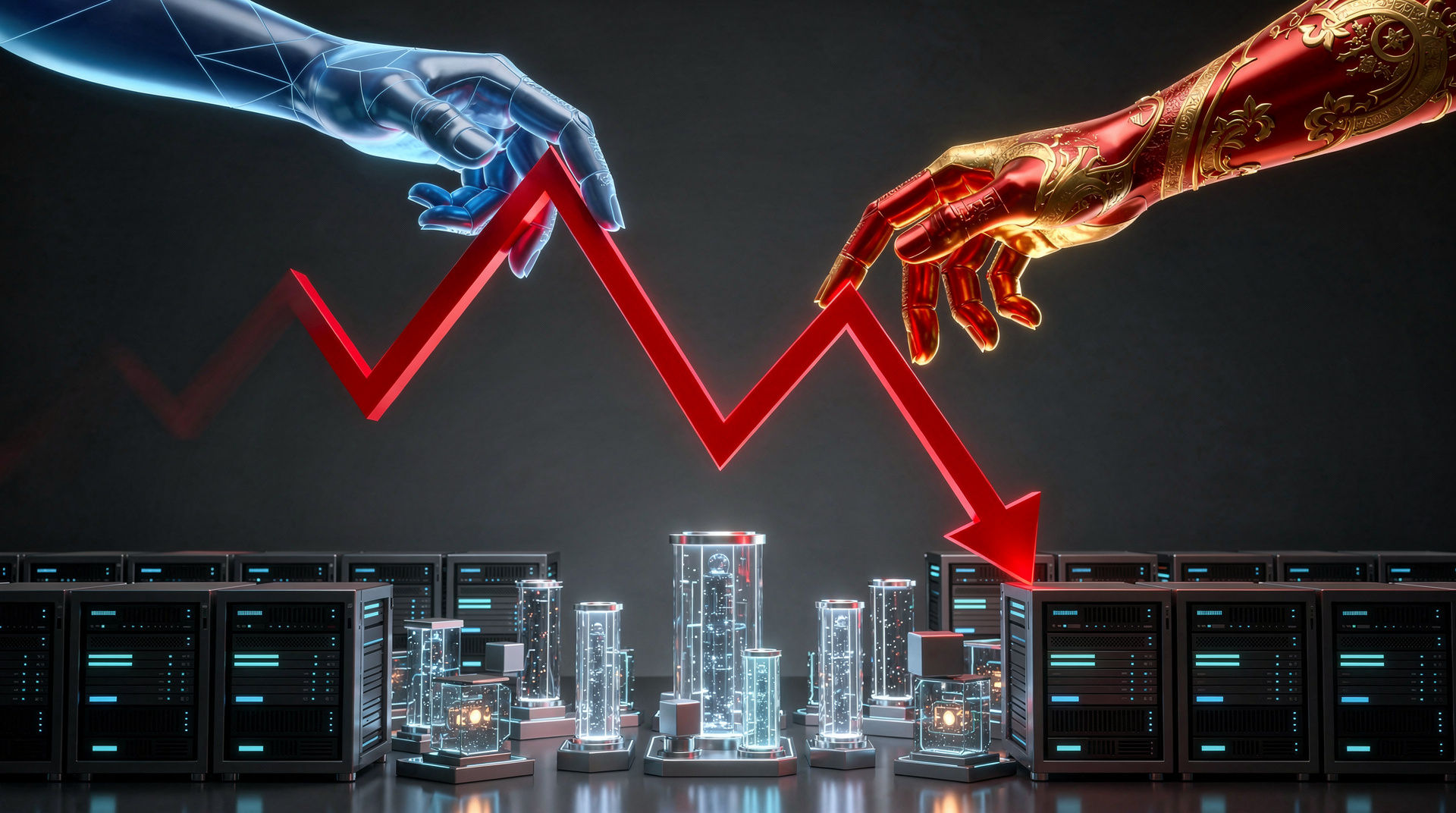
Z.AI and MiniMax have lost a third of their value this month. Washington's push to cut them off from frontier models adds fear — but the deeper cause is a valuation reckoning China built for itself. watchchina.ai untangles which is which
In a nutshell
China's AI stocks have shed $33 billion this month. It looks like American containment working — but the bigger force is a bubble China blew itself. A valuation correction is not a capability collapse.
Our members-only forecast explains why the selloff will permanently bifurcate China's AI sector — diversified giants survive, pure-plays get repriced or absorbed, why US restriction threats are more valuable to Washington unexecuted than executed, and why the valuation reset may ultimately strengthen China's AI industry by forcing the discipline the land-grab era lacked.

Two Forces, One Selloff
For seventy-two briefings, watchchina.ai has tracked the September escalation piece by piece — the intelligence advisory naming six Chinese firms in Package #69, Amodei's "slow down" essay bundled with China restrictions in Package #71. This week, those political pressures collided with a financial reality China created for itself, and the collision has a price tag. Shares of Z.AI and MiniMax have each plunged more than 30% in September, wiping roughly $33 billion from their combined market value. The question watchchina.ai exists to answer is the one the headlines blur: how much of this is America's doing, and how much is China's own?
The honest answer is both, and separating them matters. Bloomberg frames the immediate fear plainly: investors now see a looming risk as Anthropic and other US developers call on policymakers to restrict Chinese access to frontier models, accusing rivals of distillation — the exact campaign watchchina.ai documented reaching the intelligence-advisory stage last week. If Washington succeeds in cutting Chinese labs off from the American models they have used, one input to their development pipeline disappears, and investors are pricing that threat in real time. The "pacing the frontier" essays from Amodei and Altman added a second shock: Asian AI stocks fell as much as 13% on September 14 alone, because any signal that labs might deliberately throttle capability growth reads straight through to order books and revenue expectations. American political pressure is unquestionably part of this selloff.
The Bubble China Blew Itself
But watchchina.ai's discipline is to resist the comfortable narrative, and the comfortable narrative here — "America is crushing Chinese AI" — is only half true. The larger force behind the collapse is a valuation reckoning that was coming regardless of anything Washington did, and this portal has been flagging its approach since the Unitree crash in Package #61. Consider the numbers behind the numbers. Z.AI's parent, Zhipu, hit an intraday market value above $112 billion in May — more than 17 times its IPO price. That was never sustainable, and it is not American pressure that makes it unsustainable; it is arithmetic. Macquarie is still modeling both Z.AI and MiniMax as loss-making all the way into 2030. Jefferies flags customer concentration, low switching costs, and cash burn. Z.AI has raised roughly $9 billion in two months — a $4 billion placement in July and $5 billion more in September, the latter at a 10% discount — diluting shareholders repeatedly to fund a frontier race that remains deeply unprofitable.
This is the monetisation reckoning watchchina.ai forecast when DeepSeek introduced surge pricing and Alibaba attached revenue-share strings in Packages #62 and #63 — now expressed as a stock chart. The Chinese AI industry spent two years in a land-grab, buying market share with free models and cheap tokens, and investors rewarded that growth with internet-boom multiples. The bill for that strategy — the absence of profit beneath the diffusion — is now coming due, and it would be coming due even if Anthropic had never written a word. As one analysis put it, the market is repricing AI revenue multiples downward, and China's aggressive fundraising is the catalyst keeping the pressure alive. The revealing detail watchchina.ai flags: the selloff is concentrated in the pure-play model companies — Z.AI, MiniMax — that went public this year with no other business to cushion them, while diversified giants like Alibaba, whose AI sits inside a vast profitable cloud-and-commerce empire, are far more insulated. That is not a pattern American threats would produce. It is a pattern that says the market is finally distinguishing between AI businesses that can pay for themselves and AI businesses that cannot.
What This Means — and What watchchina.ai Won't Overclaim
The synthesis, as across all seventy-two briefings, requires holding both forces at once without collapsing into either narrative. America's restriction campaign is real and adds genuine risk — if Washington cuts Chinese labs off from frontier models and the distillation crackdown bites, it removes one input and spooks investors further. watchchina.ai will not pretend US pressure is irrelevant; it is a real weight on the scale. But anyone reading this selloff as proof that American containment is working is misreading the chart. The dominant force is a domestic Chinese bubble deflating under its own weightlessness — companies valued at internet-scale multiples while modeling losses into the next decade, diluting relentlessly to stay in a race none of them yet profits from. And here is the deeper point this portal has argued all year: a valuation correction is not a capability collapse. Z.AI's revenue grew 400%. Its models remain among the world's best and freely available. MiniMax keeps shipping. The stocks are falling not because the technology failed but because the prices got ahead of the business — exactly as they did for America's own AI-linked names, which also fell in the same "pacing" selloff. The chip-and-model war and the valuation cycle are two different clocks, and watchchina.ai keeps them separate. What died this month in Hong Kong was not China's AI. It was the fantasy that China's AI would be free to build and instantly profitable to own. Those were always two different things. The market just remembered which is which — and so, as ever, does watchchina.ai.
Sources: Bloomberg, CNBC, Invezz, OfficeChai, Bamboo Works, Macquarie and Jefferies (via SCMP/Invezz)
Strategic Analysis — For Members Only
🔒 This analysis is for watchchina.ai Intelligence members only.
Already a member? Log in here