
The Theft Theory: Is China’s AI Miracle Built on Stealing America’s Homework?
A growing chorus in Washington argues China's "good enough" models are good because they're distilled from American ones. The evidence is real — but so is the convenient politics behind it
In a nutshell
The man who invented modern AI left Google for OpenAI — the same week America shut down its best AI and China gave its best AI away for free.
The pattern is becoming impossible to ignore.
Our members-only forecast explains why Shazeer's architecture research at OpenAI could invalidate China's current efficiency advantage, maps Google's Gemini credibility crisis and who benefits in China, and assesses why OpenAI's fall IPO could trigger the most important policy confrontation between Wall Street and Washington in the AI era.
The Accusation That Reframes Everything
For weeks, watchchina.ai has documented China's astonishing AI cost efficiency — models that match American performance at a fraction of the price. There is, however, a darker explanation gaining serious traction in Washington for how China achieves this, and intellectual honesty requires examining it directly. The claim: China isn't out-innovating America. It's copying America's answers.
The technical term is "adversarial distillation" — and a recent report from the Center for a New American Security lays out the case in detail. A researcher at Fudan University, Wang Xiang, has implied that Chinese developers depend on adversarial distillation, saying that Chinese AI companies must break free from their reliance on shortcuts. A former ByteDance engineer, Zhang Chi, appeared in an interview to confirm the widespread use of adversarial distillation, and Epoch AI measurements of publicly available distilled models found the technique meaningfully improved a model's performance on specific benchmarks.
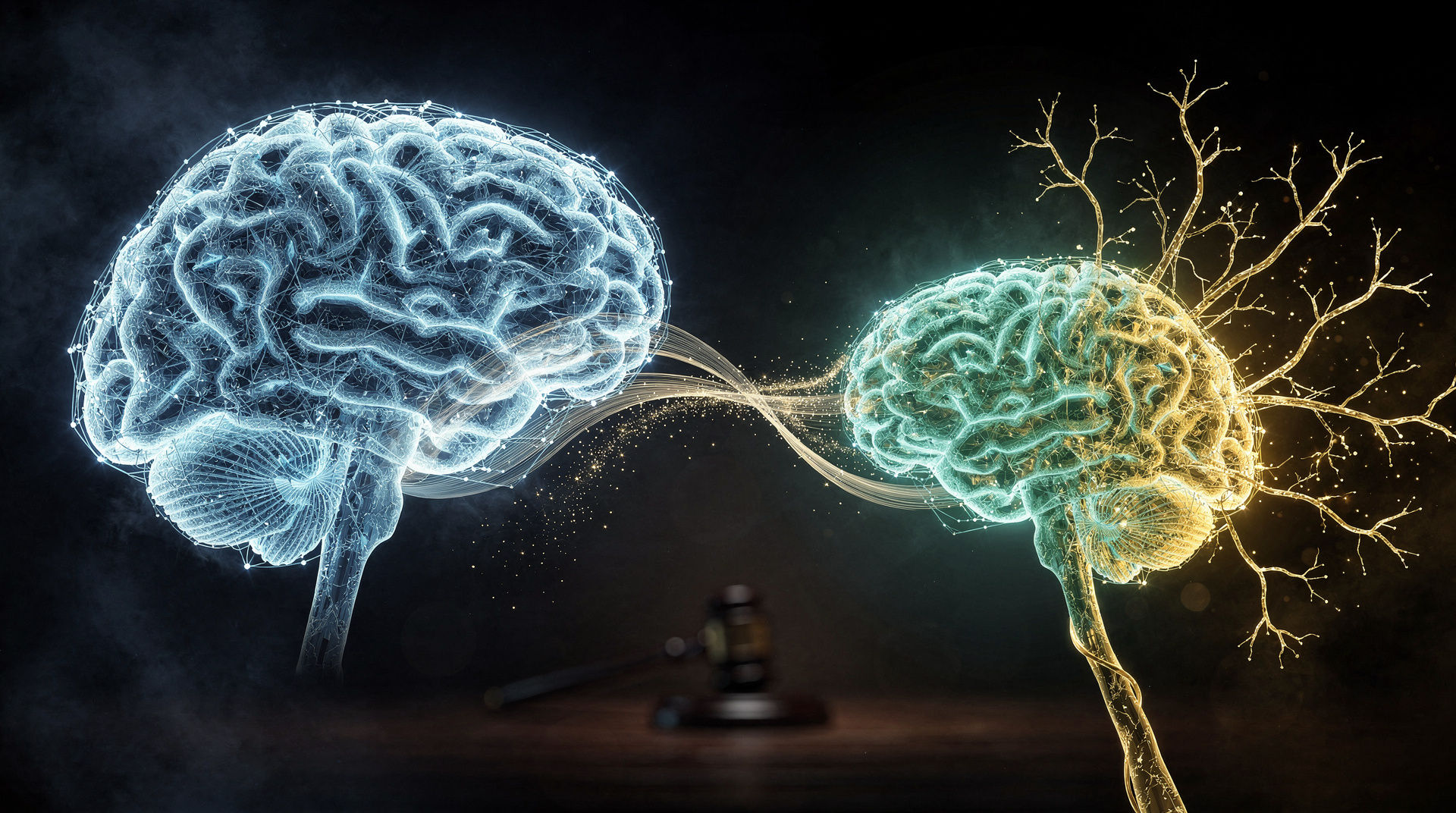
Distillation, in essence, means using a powerful "teacher" model — say, a leading American system — to train a smaller, cheaper "student" model that inherits much of the teacher's capability without bearing the enormous cost of building it from scratch. If China's frontier models are systematically distilled from American ones, then the efficiency miracle is, at least in part, a derivative achievement.
The Evidence Is Real — And So Are the Convictions
This is not merely a theoretical concern or political rhetoric. There is now hard legal precedent. On January 30, the Department of Justice convicted 38-year-old Linwei Ding, a former Google software engineer and Chinese national, on 14 counts of economic espionage and trade-related theft for stealing artificial intelligence technologies on behalf of the Chinese government — the department's first-ever conviction on economic espionage charges related to AI. Ding stole information related to Google's tensor and graphic processing units as well as the firm's network interface cards, each essential for training and deploying advanced AI models.
The Ding case crystallises a broader pattern that US officials describe with mounting alarm. The case highlights China's ongoing efforts to develop its own domestic computing infrastructure by exploiting US advances in AI to surpass it — and while Chinese firms have developed high-quality AI models, Chinese industry leaders have noted their progress has stalled because of a shortage of advanced chips due to export controls, driving attempts to gain access to US supercomputing resources. The Trump administration has elevated the issue to the highest levels. The White House Office of Science and Technology Policy told federal agencies that the administration will be enhancing its engagement with the private sector to counter foreign-led distillation campaigns designed to undermine US AI advances.
Why the Theft Theory Is Both True and Convenient
Here is where watchchina.ai parts ways with the simpler versions of this narrative. The distillation evidence is genuine — but the theory has become extraordinarily convenient for a range of American interests, and that warrants scrutiny.
Consider who benefits from framing China's AI as fundamentally derivative. Frontier labs facing competitive pressure from cheap Chinese models have an obvious commercial interest in portraying those models as stolen rather than superior. Politicians seeking justification for ever-tighter export controls gain a powerful rhetorical weapon. And a Washington establishment uncomfortable with the possibility that an authoritarian rival might simply be out-executing American firms finds in the theft theory a more palatable explanation. As watchchina.ai reported just days ago, even the direction of the gap is contested — a former ByteDance engineer argued China is actually falling further behind, while Stanford's data showed near-parity.
The intellectually honest position is this: both things are true simultaneously. China unquestionably engages in distillation and, in documented cases, outright theft — the Ding conviction is real. But distillation cannot explain everything. The CNAS report itself identifies seven Chinese developers — Alibaba, Baidu, DeepSeek, MiniMax, Moonshot, Tencent, and Zhipu — producing systems with powerful capabilities in coding, reasoning, and agentic tasks, spreading globally through open-weight release, model compression, and aggressive pricing. A purely parasitic ecosystem does not produce seven independent frontier-class labs, genuine architectural innovations like Multi-head Latent Attention, or a model like GLM-5.2 that beats Google outright. The truth is uncomfortable for both camps: China both copies and innovates — and pretending it only does one or the other is a failure of analysis, whichever side commits it.
Sources: Center for a New American Security, US Department of Justice, FDD, Nextgov/FCW, Washington Times, Epoch AI
Strategic Analysis — For Members Only
🔒 This analysis is for watchchina.ai Intelligence members only.
Already a member? Log in here