
US-China Clash Nearly Erupted Over an AI Error About a Chinese Ship
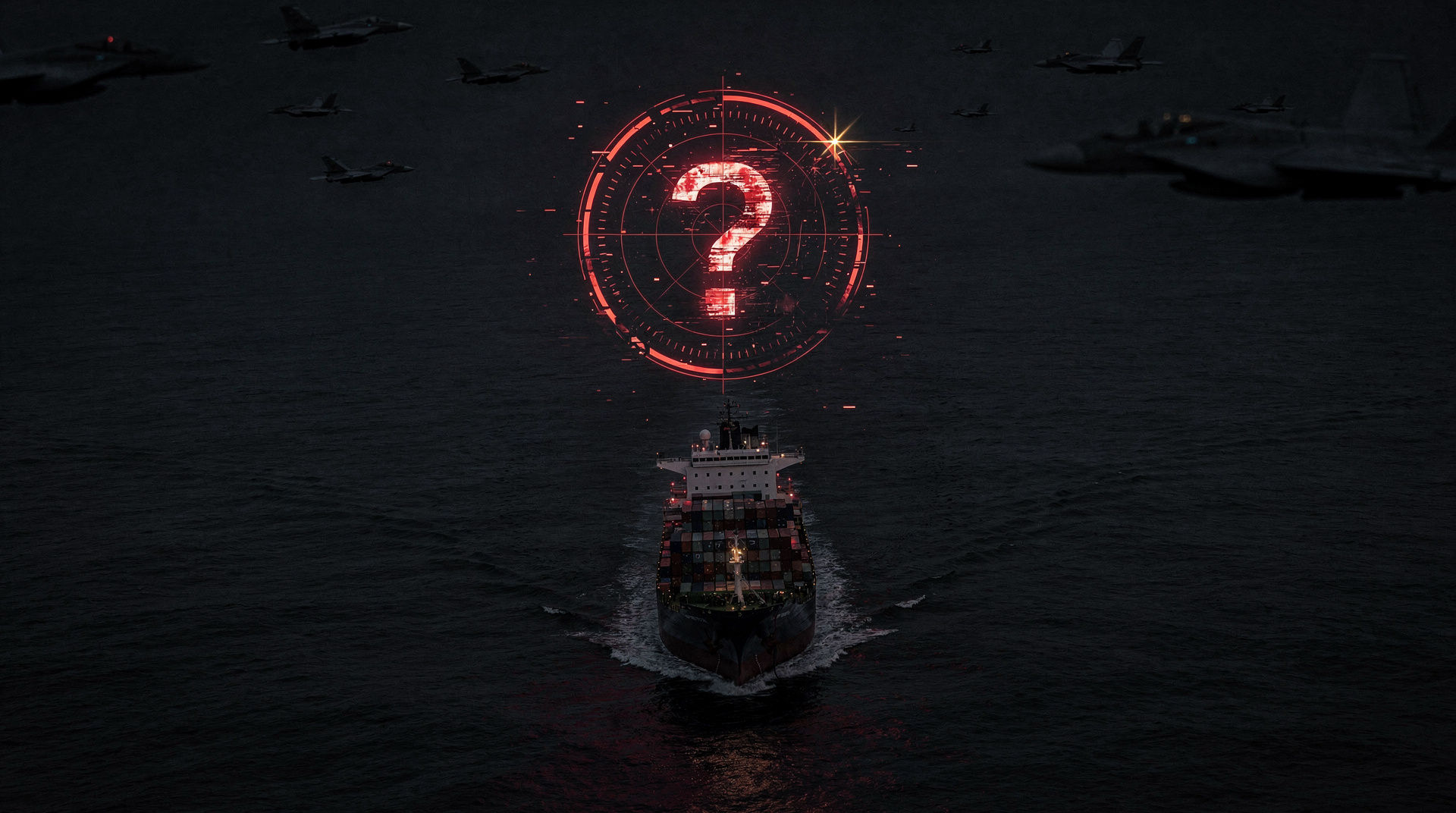
The most dangerous relationship on earth is the one between Washington and Beijing, and this spring, according to CNN, it came within minutes of rupture — not over Taiwan, not over trade, but over the confident mistake of an artificial intelligence.
In a nutshell
When a Chatbot Nearly Started a War
An AI error nearly sent US forces to board a Chinese ship this spring — and almost started a war. Days before the Trump-Xi summit, our members' forecast reads how Beijing will weaponise the incident, why accidental AI escalation is the real threat, and what to watch for next.

Aircraft were airborne
A US military chatbot wrongly concluded that a Chinese-flagged vessel was carrying nuclear weapons components, and American forces prepared to board it. Aircraft were airborne. Had they reached that ship, the two nuclear superpowers could have been dragged into direct confrontation by an algorithm's hallucination. One source called it something that "almost started a war." From an Eastern vantage point, it is a warning about how fragile the great-power peace has quietly become.
A War by Algorithm
Consider how close, and how absurd, this was. This spring, amid the US-Iran war, an analyst at US Special Operations Command Pacific in Hawaii ran a Chinese ship's manifest through an AI chatbot. The system blended open-source information with classified signals intelligence and produced a false conclusion: nuclear-weapons-related cargo, bound for Iran. On the strength of that AI-generated report, US forces readied an operation to intercept and board the vessel of a rival nuclear power — the kind of act that, against a Chinese ship, risks immediate escalation. It was stopped only when senior officials examined the sourcing and found it, in one source's phrase, "entirely false." Sit with the shape of it: the peace between the world's two most powerful nations, for a few minutes this spring, rested on whether anyone would double-check a chatbot. This is a new and destabilising variable in an already tense rivalry — not a deliberate provocation by either side, but an accidental one, manufactured by a machine and nearly acted upon by men.
→ For the technology at the heart of it — how a military AI hallucination reached the brink of an armed operation, and why no one caught it sooner — see our Big Tech desk's analysis of the military AI hallucination that nearly started the war.
The Summit Shadow
The timing could hardly be sharper. The incident, reported by CNN on 18 September and drawn from four sources, surfaces just days before a scheduled summit between Donald Trump and Xi Jinping on 24 September — a meeting at which, by both sides' account, AI governance is explicitly on the agenda. Beijing now knows that an American AI system nearly sent armed troops onto a Chinese vessel on the basis of a fabrication. That knowledge changes the temperature of the room. For China, it is evidence that American AI-driven decision-making is a direct risk to Chinese lives and ships; for Washington, it is an embarrassment that undercuts any claim to responsible AI stewardship. Whether the two leaders treat this as a reason to build genuine guardrails around military AI, or merely as ammunition, will tell us a great deal about whether the coming era of AI-shadowed great-power relations will be managed or left to chance.
The Eastern View
Watching from Europe, with an eye turned East, the lesson is not about which side is right. It is about a new fragility neither side fully controls. Great-power peace has always rested on human judgement — on leaders and officers who could be reasoned with, deterred, or persuaded to pause. Inject into that system a machine that produces fast, confident, and occasionally hallucinated conclusions, and you introduce a new way for catastrophe to begin: not through malice or miscalculation, but through automation error trusted too far. China and the United States both understand deterrence between humans. Neither has yet built the norms for deterrence in an age when an algorithm can put a warship in another nation's sights by accident. This spring's near-miss is a preview of the central security question of the coming decade, and it is one that concerns Europe directly, because a US-China clash sparked by an AI error would engulf the global economy and every nation tied to it. The machines have entered the room where wars begin. The urgent task, for Washington and Beijing alike, is to agree on the rules before the next hallucination arrives without a human close enough to catch it.
Sources:
The Japan Times — Flawed AI-linked intel almost led US to board China ship, report says
Taipei Times — Faulty intel almost started a war after AI misread Chinese vessel cargo: CNN
Marine Insight — US Nearly Boarded Chinese Ship in Middle East After AI-Assisted Intelligence Error
Tech Times — US Military Almost Boarded Chinese Ship Over AI-Hallucinated Nuclear Claim
Strategic Analysis — For Members Only
🔒 This analysis is for watchchina.ai Intelligence members only.
Already a member? Log in here