
China Just Cracked the Machine It Was Never Supposed to Build — And $270 Billion Vanished in a Day
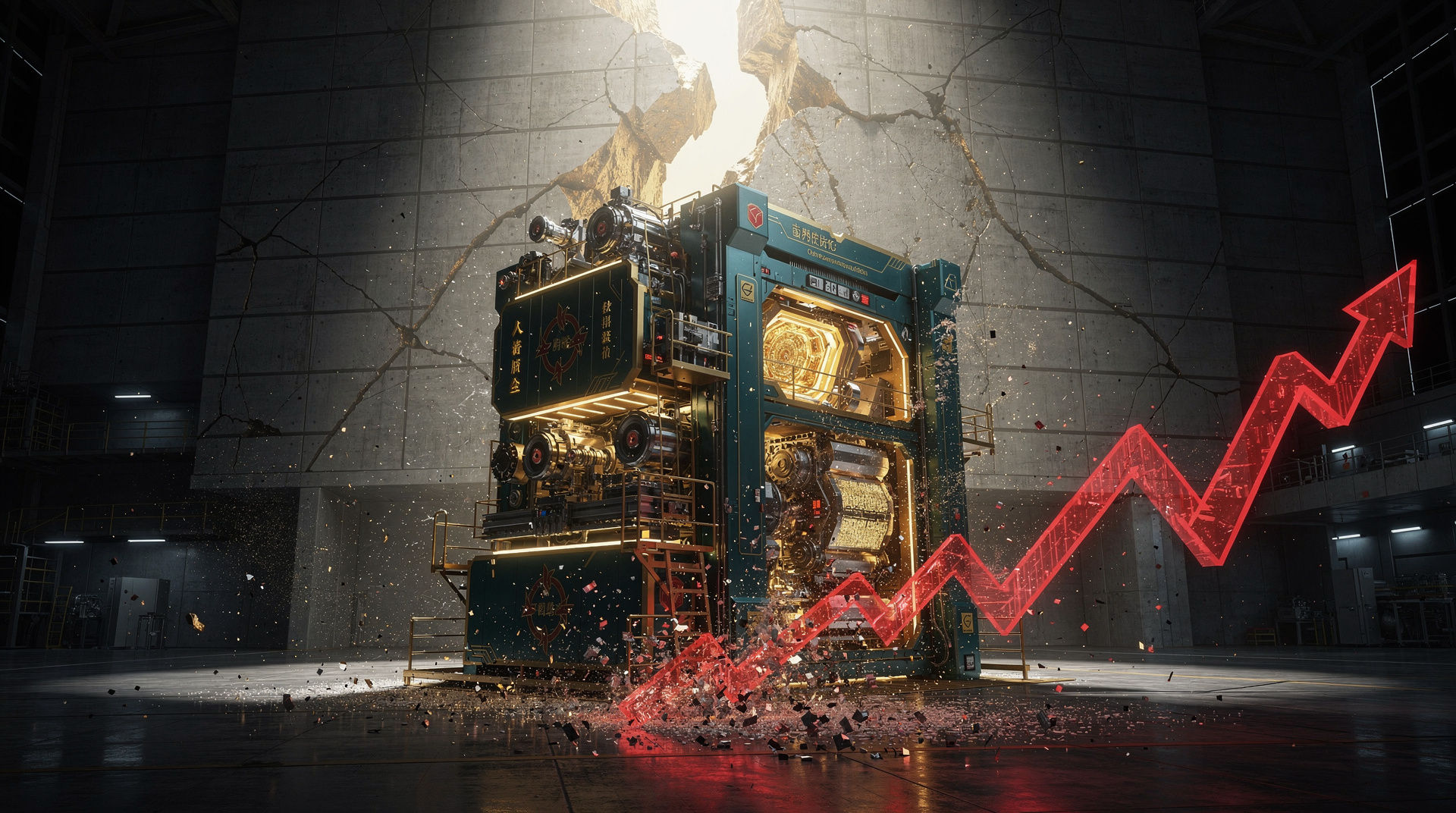
A Shanghai company is mass-producing DUV lithography machines, the crown jewel of the technology China was cut off from. ASML fell 8%. But watchchina.ai will tell you what the panic gets wrong
In a nutshell
China just cracked the lithography machine it was never supposed to build. ASML lost $270 billion in a day. The panic is overblown — but the trajectory is undeniable.
Our members-only forecast explains why China's DUV output will scale 10x faster than Western analysts predict, why the Congressional bill to cut off SMIC and CXMT from ASML will backfire and accelerate exactly what it intends to prevent, and why ASML is about to adopt the same contradictory posture Nvidia did — publicly reassuring investors while privately warning Washington that controls are building the rival.

The Last Wall in the Chip War
For years, one machine stood at the absolute center of America's ability to contain China's chip ambitions: the lithography system. As watchchina.ai has documented throughout the chip-war coverage, China could design chips, it could build fabs, it could innovate at the architecture level — but it could not make the exquisitely complex machines that print circuits onto silicon. That capability belonged, almost entirely, to one Dutch company: ASML. This week, that wall developed its first real crack.
In late July 2026, news broke that a Chinese state-backed company had begun mass-producing immersion deep ultraviolet (DUV) lithography machines — the first time China has built its own tools for more advanced chip production. Reuters named the manufacturer: Shanghai Aishengna Electronic Technology Group. The first machines are due to reach SMIC, Hua Hong Semiconductor, and memory maker ChangXin Memory Technologies later this year. The market reaction was violent and immediate. The report triggered an immediate market reaction: ASML shares plunged roughly 7%, and South Korean memory makers Samsung and SK Hynix each fell more than 13%, erasing approximately $270 billion in combined market value. In a single day, the mere report that China had built this machine wiped out a quarter-trillion dollars of Western and allied chip-industry value.
Why the Panic — and Why It's Overblown
watchchina.ai's core discipline is separating the signal from the noise, and this story demands exactly that, because the market's $270 billion reaction dramatically overstated the immediate reality. The caveats are substantial and honest analysis requires stating them plainly. Output targets are around five machines in 2026 and roughly 20 in 2027 — a rounding error against ASML's planned 130 immersion systems in 2026 alone. China's new immersion DUV platform does not match ASML's latest systems; it is still viewed as a generation behind in throughput, overlay precision, and long-term reliability. And crucial questions remain unverified: the manufacturer is opaque, technical specifications are thin, and SemiAnalysis analysts caution that scaling production of the machine itself is "the most underestimated part."
So the panic that erased $270 billion was, in the near term, an overreaction — ASML's dominance is not ending this year, or next. But watchchina.ai has learned, across two months of this coverage, that the immediate numbers are almost never the real story with China's tech ambitions. The real story is the trajectory, and the trajectory is the same one we have documented again and again: LongCat trained on domestic chips, Huawei's Ascend ramp, SMIC's 5nm without EUV, and now the lithography machine itself. Each individual milestone looks modest in isolation. Together they trace an unmistakable line — China systematically replacing every single link in the semiconductor supply chain it was cut off from.
The Sanctions Paradox, Written in Silicon Once More
The deepest meaning of the DUV breakthrough is the one watchchina.ai flagged on July 4th with LongCat, now confirmed in the most strategically sensitive domain of all. As one analysis put it precisely: US export controls have not halted the technological catch-up of China's semiconductor industry, but have instead accelerated the formation of an independent supply chain. The lithography machine is the ultimate proof. China was building DUV tools before, but slowly, without urgency, because it could simply buy superior machines from ASML. The export controls removed that option — and in doing so, they converted a low-priority research effort into a national emergency backed by tens of billions in state funding and cross-enterprise R&D integration. The wall that was meant to keep China out became the reason China built its own door.
There is a delicious, telling footnote that captures the whole dynamic. Among the major winners of ChangXin Memory Technologies' blockbuster IPO this week — CXMT being one of the very firms set to receive these domestic DUV machines — was DeepSeek's Liang Wenfeng, the same founder who, days ago, told the world America's lead was a compute-dependent illusion propped up by chips alone. The man betting that China would break its hardware dependence is now profiting directly from the company doing it. watchchina.ai will not overstate the moment: ASML's lead holds, the machines are few, the gap is real. But the direction is no longer in question. A bill now moving through Congress would cut SMIC, Hua Hong, and CXMT off from ASML sales and servicing by statute — and China has just demonstrated why, by the time that leverage is used, it may no longer bite. The last wall in the chip war has its first crack. Walls, as watchchina.ai has written all summer, are not China's problem. They are China's motivation.
Sources: The Information, Reuters, Tom's Hardware, CNBC, Bloomberg, IBTimes UK, SemiAnalysis, Medium/Slav Yolov
Strategic Analysis — For Members Only
🔒 This analysis is for watchchina.ai Intelligence members only.
Already a member? Log in here